The Call for Entries Is Closed. Winners Announcement Coming Soon! | See Past Winners




Beyond the Build
FreeGame's Website Redesign by TinyWins
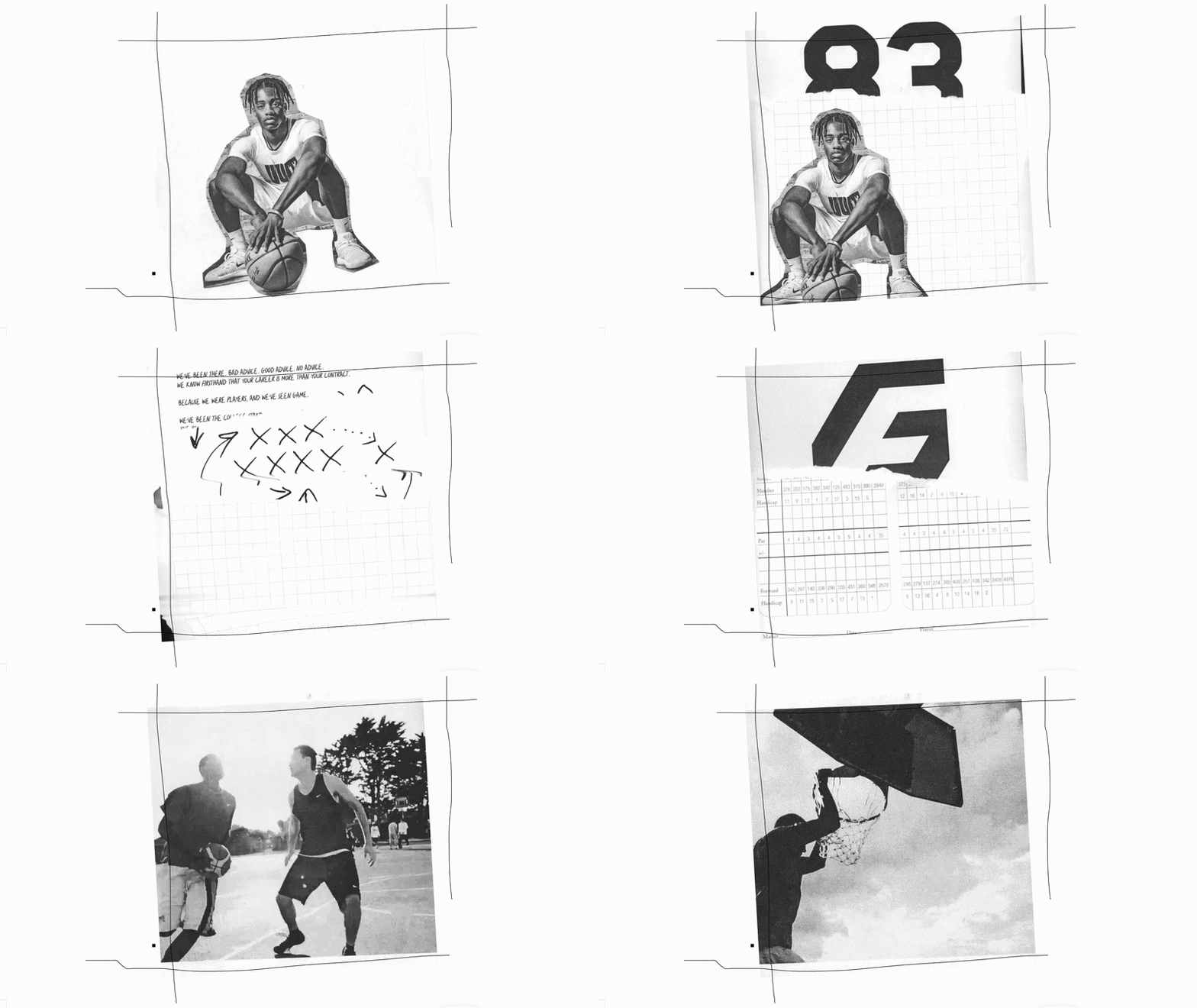
TinyWins built FreeGame a website as bold as the athletes it represents. Founded by two ex-pro basketball players who believed athletes deserved better representation, FreeGame was built to give players real ownership — on and off the court. The site hits hard from the first scroll with full-bleed black and white photography, massive typography and a manifesto that pulls no punches. Even the logo is a living system, with each athlete signing their own version of “Game.” The project earned TinyWins three 2025 w3 Gold Awards, including Website Features: Best Home Page. Check out the site to see what it looks like when design has a real point of view.

What sparked the idea for the project?
The two founders of this sports agency and ex-pro basketball players created an agency that was run by players for players with a specific concentration on NIL and Collegiate athletes. It was time for them to start their own recruiting of clients with a new story of athlete representation. One that was as much about life after the whistle, not just getting paid.
What inspired the creative direction for the project?
The creative direction was inspired by FreeGame’s mission to redefine athlete representation as something more authentic, transparent, and player-driven. Instead of the polished corporate aesthetic typical of sports agencies, the identity leans into raw, human elements—hand-scanned textures, torn paper, and personalized signatures—to reflect genuine relationships and athlete ownership. This foundation was paired with strong typography and dynamic motion to capture the energy and constant movement of modern sports culture.

Tell us about the team!
Juliana Ross and Jake Dugard (Lead Design), Iñaki Soria – Motion Design
How did the concept evolve over time?
The concept remained intentionally consistent from strategy through execution. Once we identified authenticity, autonomy, and player ownership as the core of the brand, every decision reinforced that direction rather than expanding away from it. Instead of evolving into something different, the system was designed to be inherently flexible—allowing FreeGame to grow, adapt, and build on it over time without losing its core identity.
What aspects of the project is the team most proud of?
We’re most proud of how tightly the strategy and visual system came together into one clear, cohesive idea. Nothing feels decorative—every element has a role. The handmade components, like the scanned textures and player signatures, added a level of authenticity that’s hard to fake. But more importantly, they’re not just visual—they’re built into how the brand operates, making the identity something athletes actively contribute to.
Tell us about a pivotal moment or challenge putting it all together.
The key challenge was striking the right balance between raw authenticity and clarity. FreeGame needed to feel real, personal, and slightly imperfect—but still operate as a credible, scalable agency. Finding that balance between expressive, tactile elements and a structured system was critical to making the brand feel both disruptive and legitimate.
Was there a last minute idea that came to the table that elevated the project? Tell us about it!
The idea of turning “Game” into a living signature system became a defining element. Each athlete contributes their own version of “Game,” making the identity something that evolves with every new relationship. It shifted the brand from something static to something participatory—where the athletes themselves actively shape how it shows up.
What aspects of the project do you feel made it built to stand out?
The strength of the project comes from how tightly everything connects back to a single idea: athlete ownership. Strategy, identity, and digital experience weren’t treated as separate layers, they were developed as one system. Elements like the signature “Game” mechanic and the use of raw, tactile visuals don’t just differentiate the brand aesthetically, they reflect how the company actually operates. That alignment between idea and execution is what gives it real distinction.
What about your team is built to last in this ever-evolving digital landscape?
Our approach is grounded in building strong foundations rather than chasing trends. We focus on developing clear strategic positions and flexible systems that can adapt over time. At the same time, we’re constantly exploring new tools, formats, and behaviors, so we’re able to evolve how the work shows up without losing what makes it meaningful. That balance between stability and adaptability is what allows the work to stay relevant.
What is your team building next?
We’re continuing to work across a wide range of industries, from emerging technology and robotics to lifestyle and consumer brands. Right now, we’re particularly interested in helping technically complex companies—especially in AI and robotics—translate what they do into clear, compelling brand systems. At the same time, we’re expanding our work in culture and consumer spaces, building brands that feel as considered strategically as they do visually.
The w3 Awards honors boundary-breaking digital work across Websites, Video, Online Marketing, Podcasts, Social Media, Creators, AI, Immersive, Software, Mobile Apps and more. Don’t miss your shot. Your last chance to enter is Friday, July 24th.